Helical Staircases
Sweeping curves that save space without compromising on craft — a true centrepiece
Helical Staircases
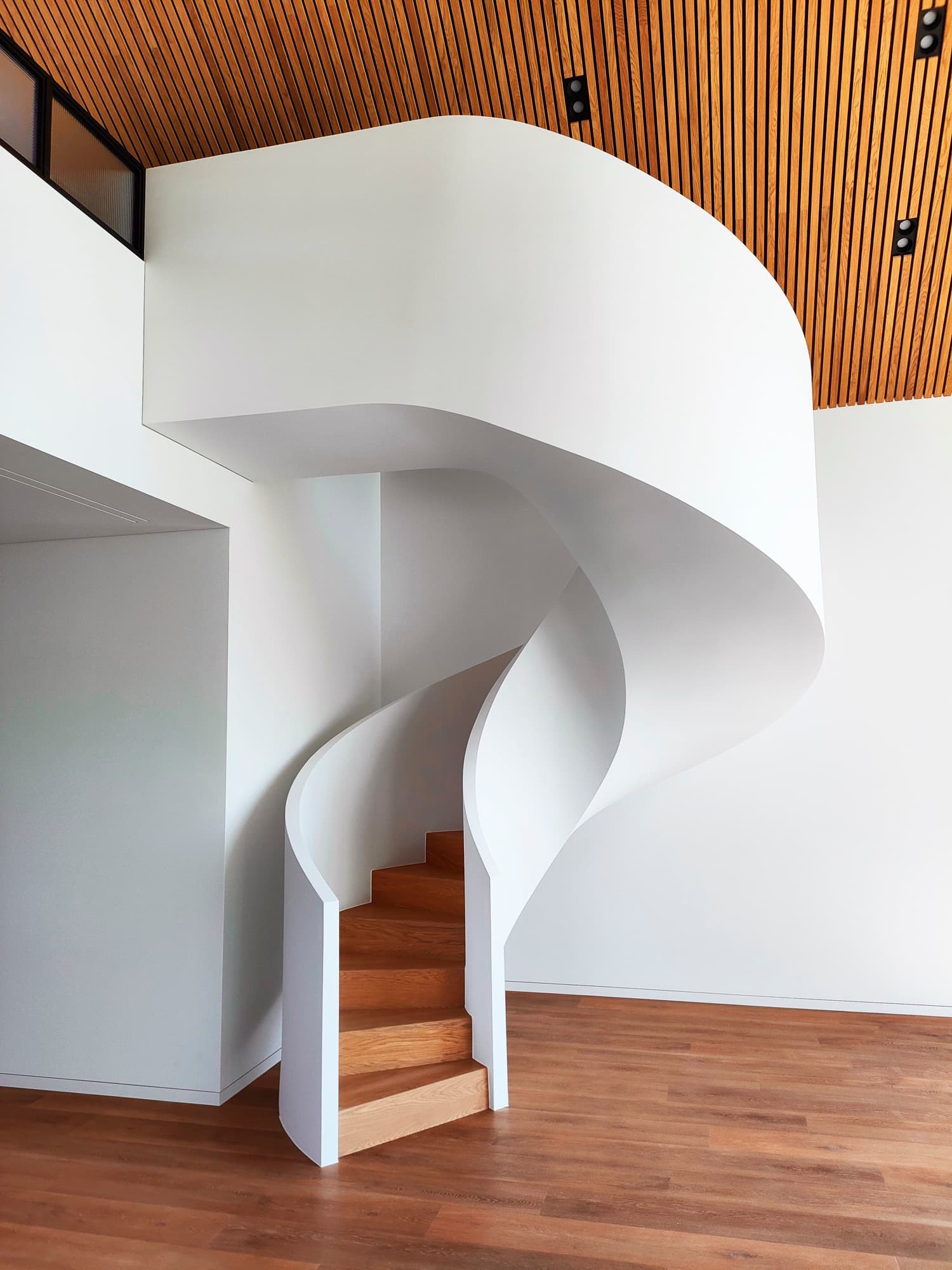
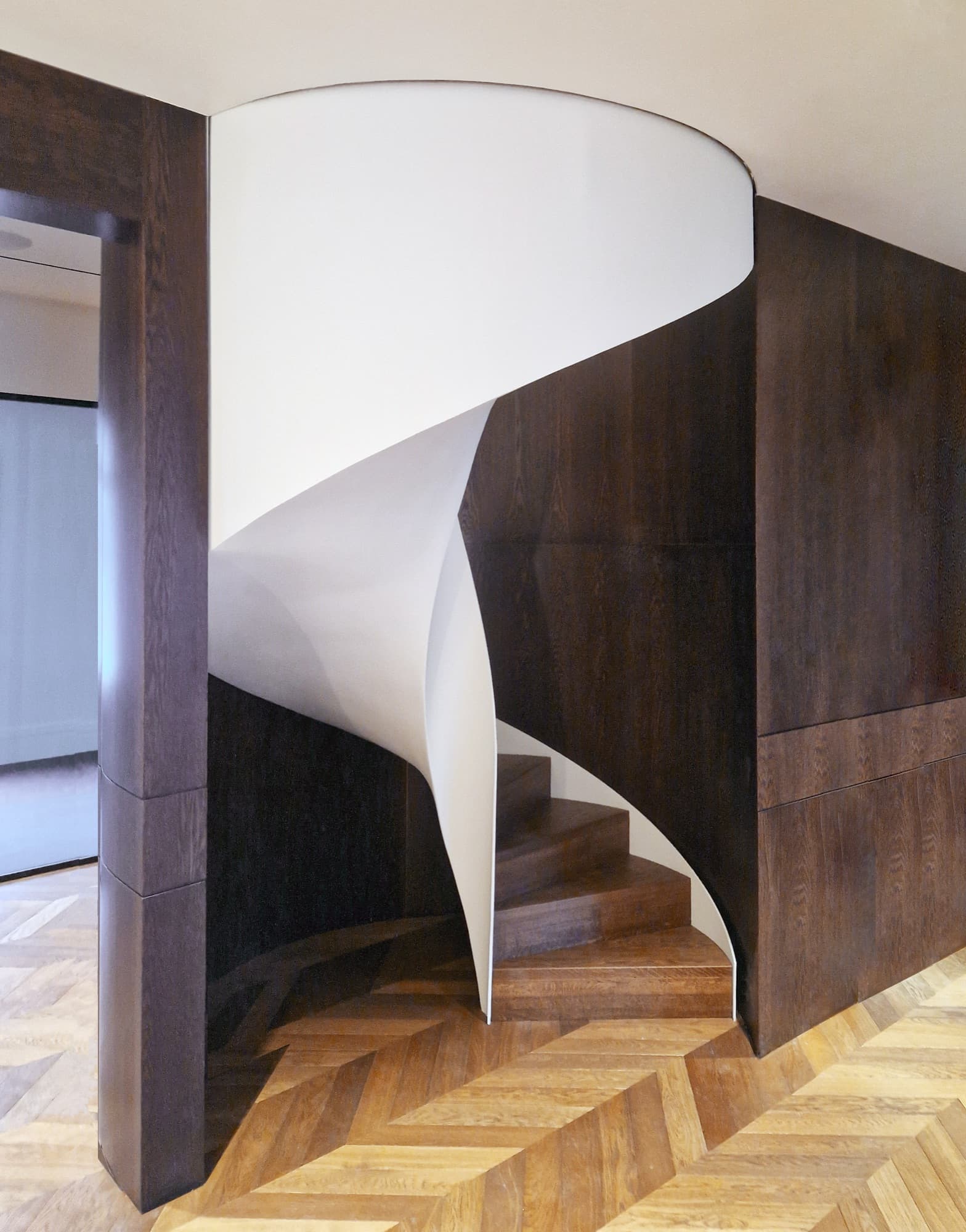
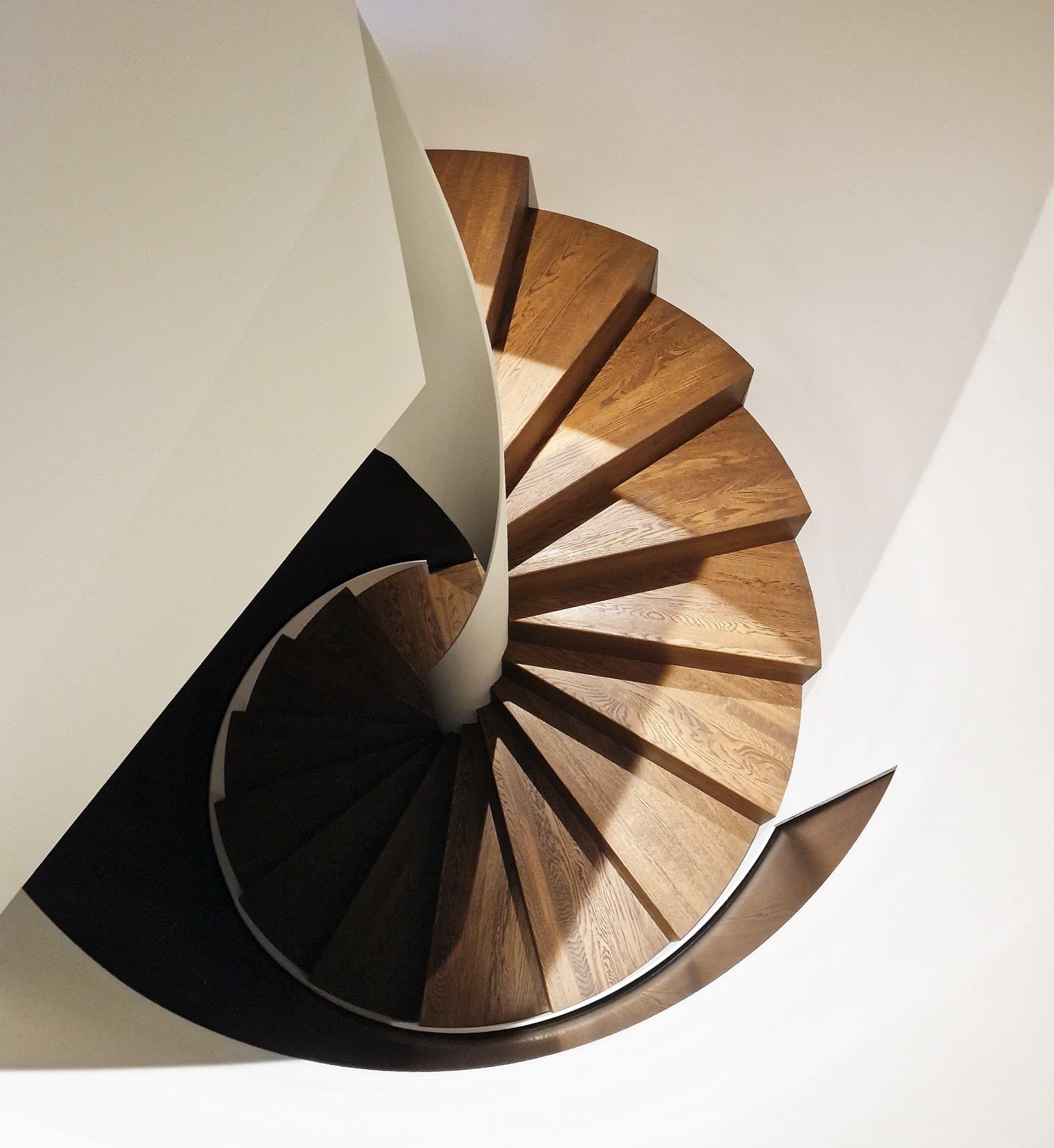
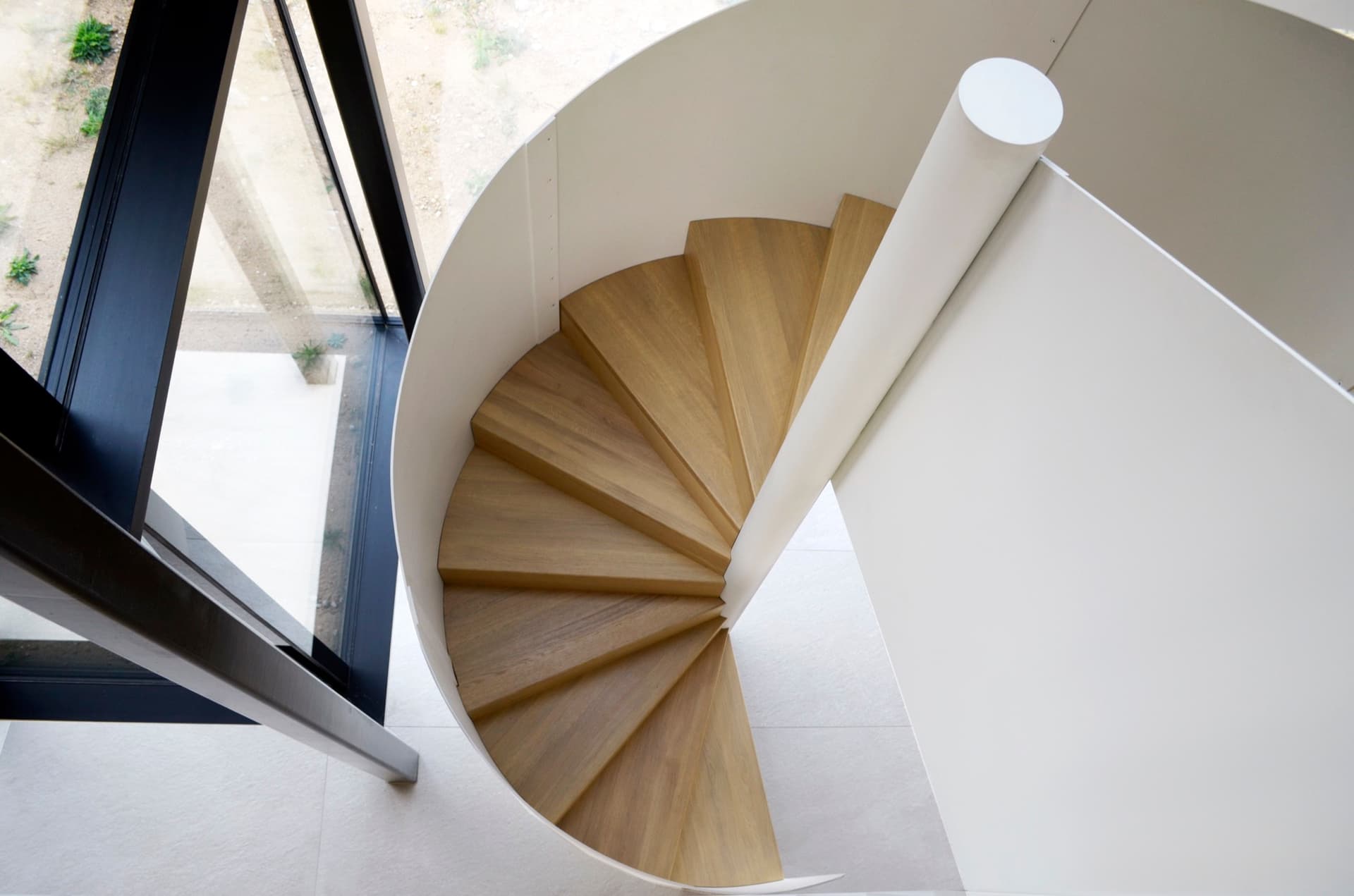
A spiral staircase revolves around a central column, with treads radiating outward in a continuous helix. It is one of the most space-efficient staircase forms — taking up significantly less floor area than a conventional flight while delivering far more visual impact.
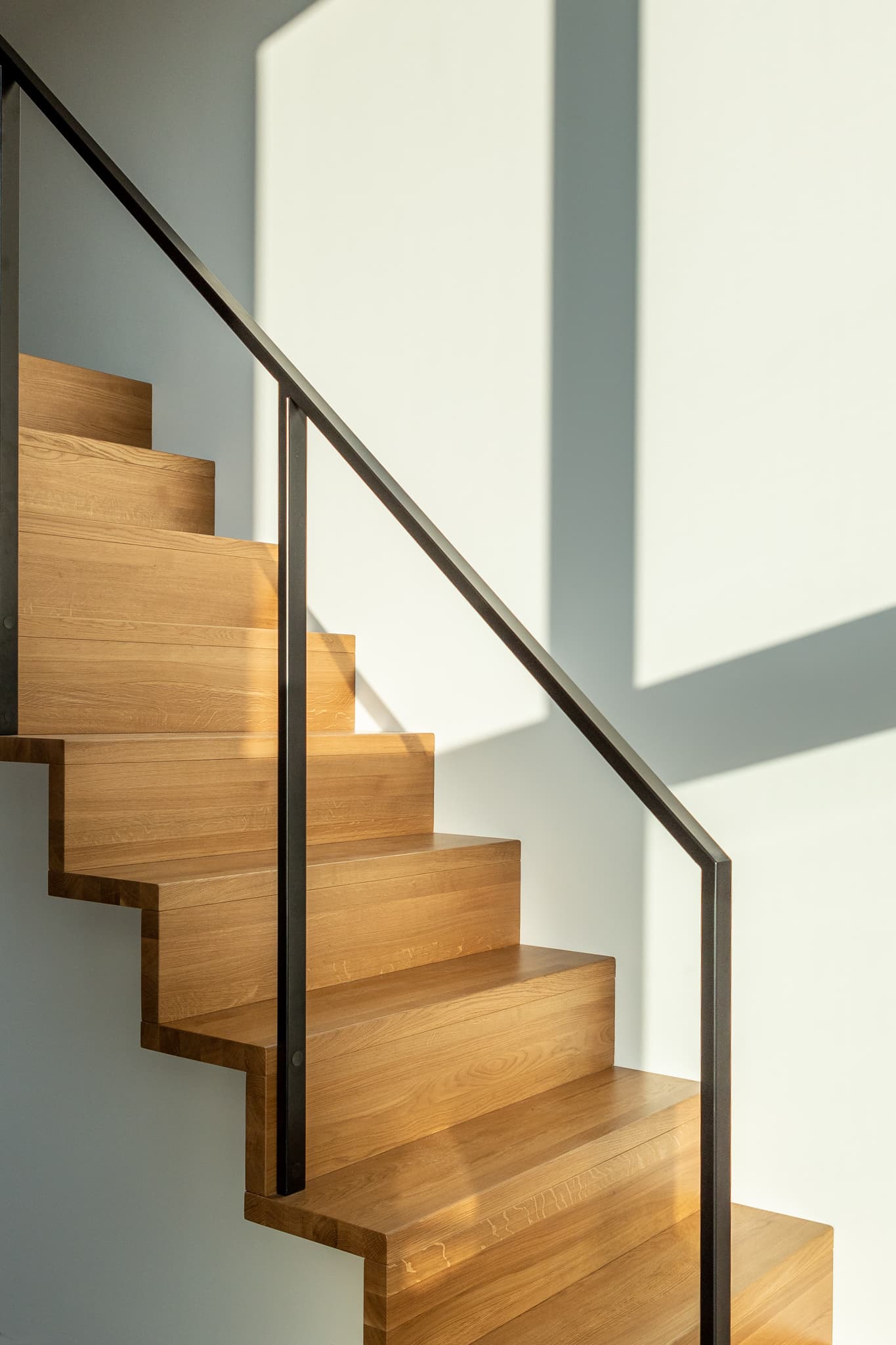
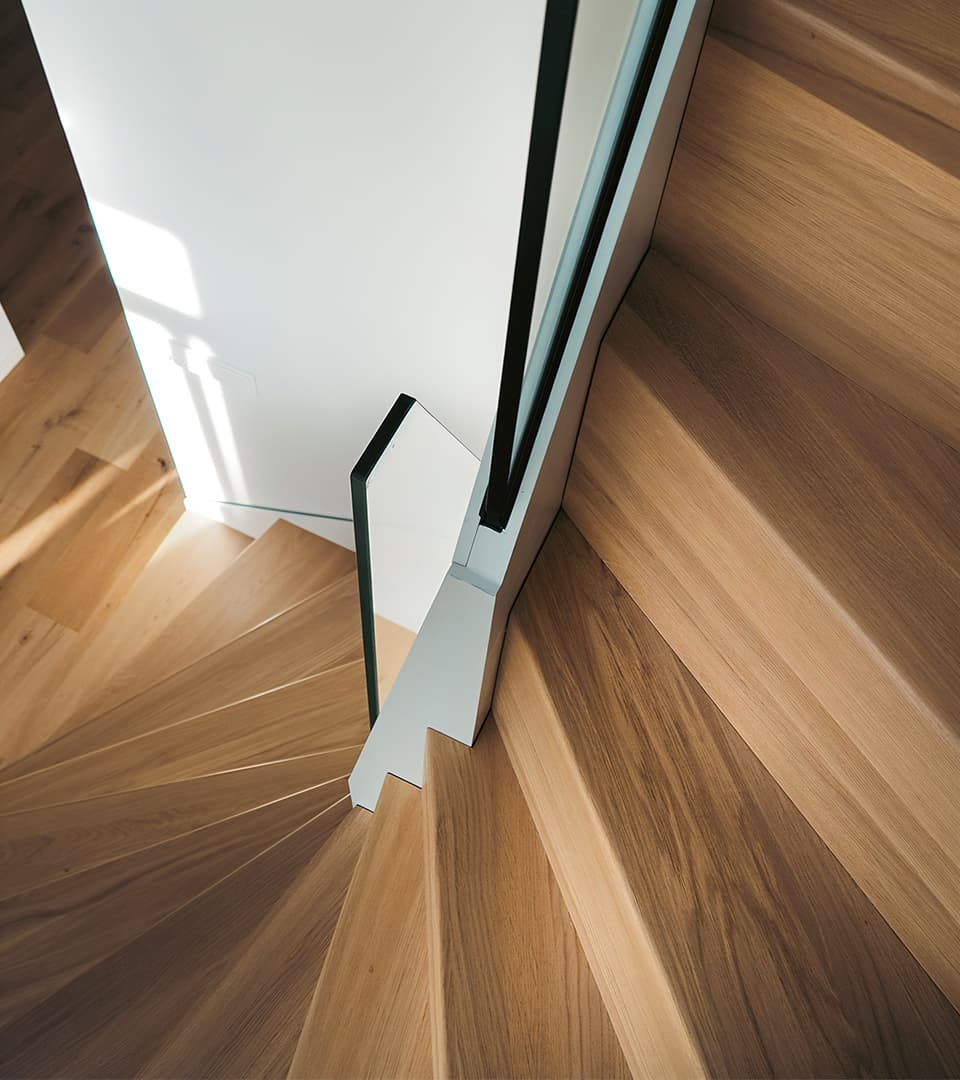
MOLTURI spiral staircases are engineered from solid European oak, walnut, or ash, with each tread precisely shaped to follow the curve. Handrails are steam-bent or laminated to match the radius, creating a seamless line from bottom to top.
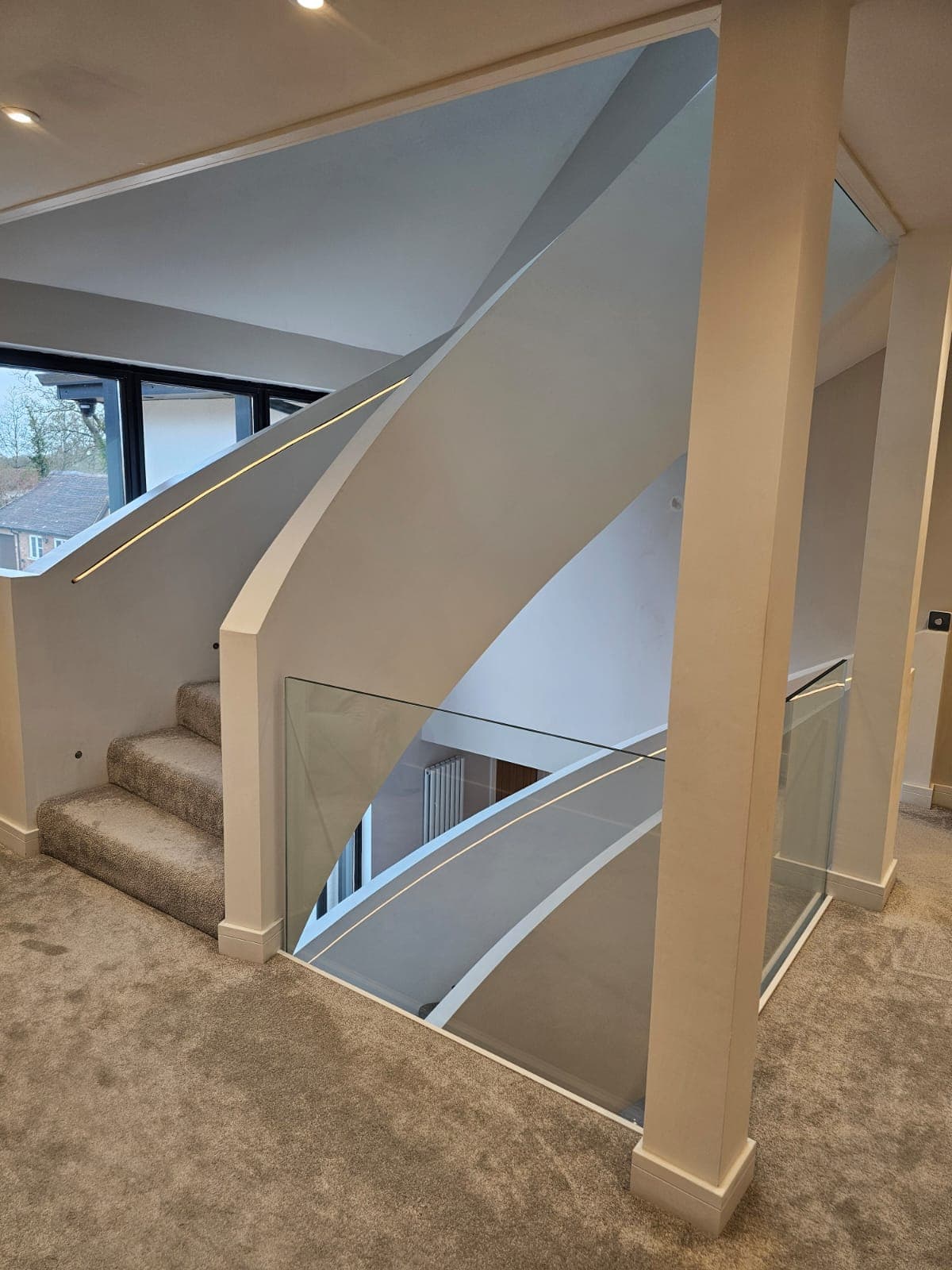
We also design helical staircases — a variation without a central column — for spaces that demand an even more sculptural form. Both types are fully assembled in our workshops before delivery to ensure structural integrity and exacting tolerances.
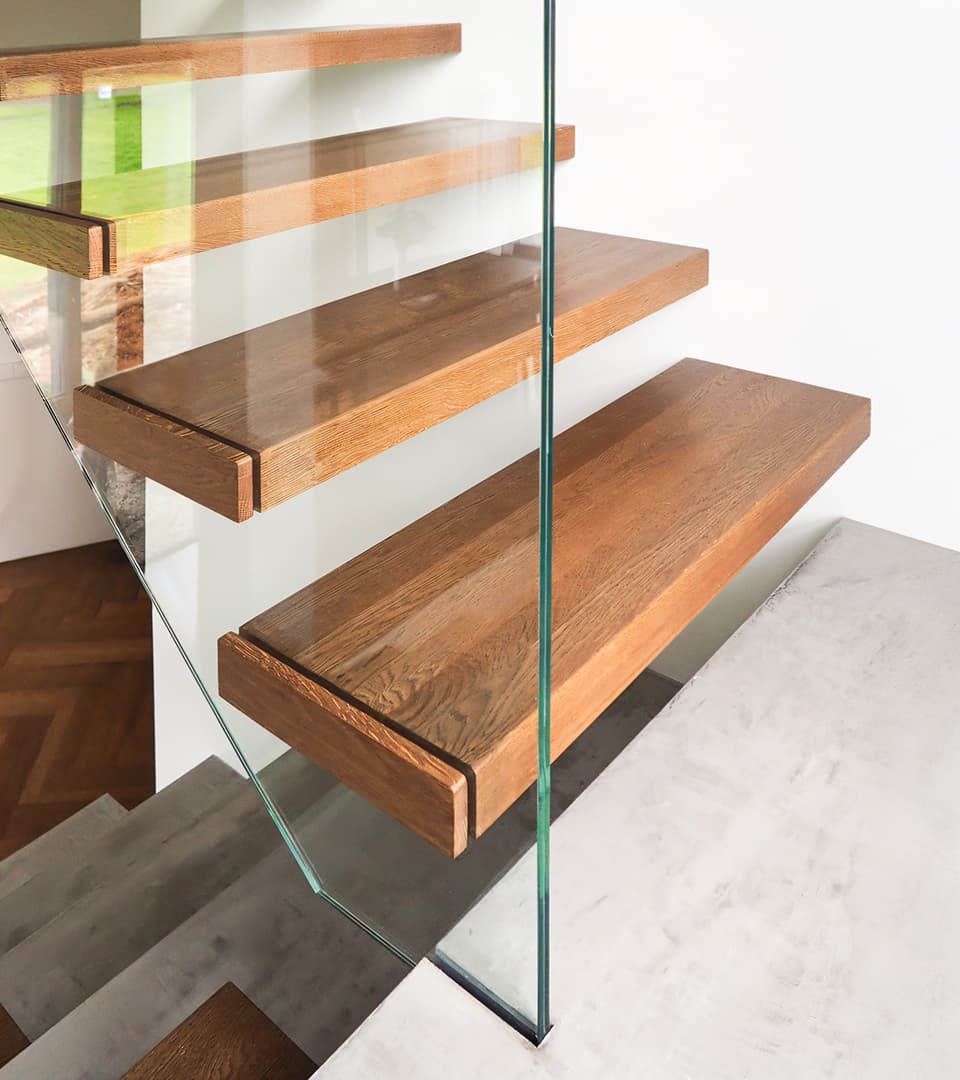
Balustrades can be designed in timber, steel, brass, or glass depending on the architectural context. Spiral staircases are extremely versatile and completely customisable — popular in both residential homes and commercial spaces where they create a striking focal point while maximising usable floor area.



Common questions about helical staircases
Do helical staircases save space?
+
Yes — one of the main advantages of a helical staircase is its compact footprint. They take up significantly less floor area than conventional flights due to their vertical configuration, making them ideal for homes where space is at a premium. Despite their smaller footprint, they deliver far more visual impact than a standard staircase.
What is the difference between a spiral and helical staircase?
+
A spiral staircase revolves around a central column, with treads radiating outward. A helical staircase follows a similar curved path but has no central column — it's a continuous sweep supported by the structure of the staircase itself. Helical designs are more sculptural and typically require more engineering. We manufacture both.
What does a MOLTURI helical staircase cost?
+
Every helical staircase is unique, so we don't publish fixed prices. The investment depends on the diameter, number of flights, timber species, balustrade design, and complexity of the curve. We provide a detailed quotation after the design consultation — free and with no obligation.
How long does a helical staircase take to build?
+
Helical staircases typically take 16–22 weeks from initial consultation to completed installation, given the engineering complexity and the need for full workshop assembly prior to delivery.
Can a helical staircase be installed in an existing home?
+
Yes. We regularly install helical staircases in renovation projects, including removing existing staircases. Our project manager coordinates structural assessment, building control liaison, and the full installation process.
Discuss your helical staircase project
Every commission begins with a conversation. Tell us about your space and how you envision the staircase.